
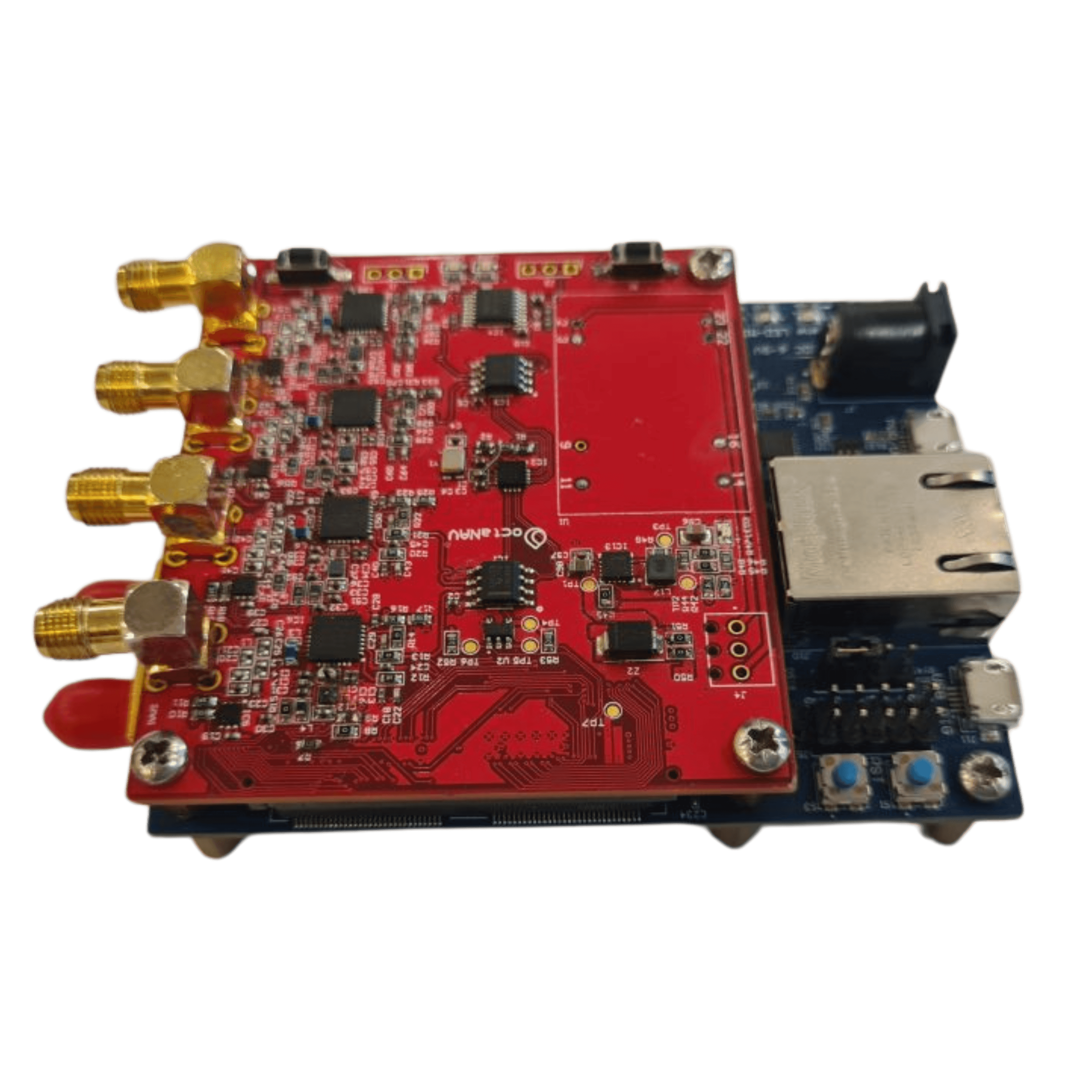
What is Software Defined Radio (SDR)?
The Future of Flexible Wireless Communication
In modern world, the field of radio communication has transformed and it is mainly due to the Software Defined Radio (SDR). It was very complex and hardware oriented field, but now SDR makes it more accessible and flexible. This is a game changer for almost all types of industries. Either you are a business owner, technology enthusiast or an engineer, SDR is revolutionizing the radio communication systems.
Understanding Software Defined Radio
Software Defined Radio (SDR) is an advanced radio communication technology in which traditional hardware components are replaced with software for signal processing. In simple words SDR are those radio systems which are controlled and operated by software applications. Means Radio systems are now manageable and can be run through a general purpose computer and processor, which is very cost effective, programmable and much easier than before.
How SDR Works?
Hardware is used to convert the analog signals into digital signals in traditional radios. In SDR these signals are already converted into digital form and then processed by software.
Key Components of SDR Systems
Radio Front-End (RF Hardware)
This component captures the signals through SDR. In SDR systems analog-to-digital (ADC) and digital-to-analog (DAC) converters are used to connect analog world to digital world.
Signal Processing
This component is the heart of SDR, where signal processing is done by software. When the signal is in digital form, with the help of software, tasks such as modulation, demodulation, filtering, and error correction can be performed.
Communication Protocols
SDR systems can be switched easily for various wireless standards such as GSM, Wi-Fi, LTE, etc. By replacing software new protocols can be processed.
Software Interface
Through user interface the operator can monitor signals, customize settings and configure the radio. This feature makes SDR so powerful for various industries.
Benefits of SDR Technology
The software-based nature and adaptability of SDR makes SDR better than traditional hardware-based radios.
Scalability and Flexibility
SDR systems can be reprogram easily to support new frequencies or communication standards. This is ideal in the situation where changes and updations in radio protocols are frequent.
Cost-Effectiveness
In SDR systems use of software is much more than the hardware, due to which upgrades and maintenance is very cost effective. Whenever new frequency or standards required, we just need to upgrade the software.
Enhanced Performance
SDR systems gives superior performance due to the use of Digital signal processing algorithms. In signal quality, noise reduction and reliability these systems are much better than traditional radios.
Rapid Prototyping And Innovation
For researchers and developers SDR is an ideal platform. For SDR it is much easier to implement and test new communication technologies, because software can be modify rapidly.
Future of SDR
Role of SDR is very important whenever we talk about wireless communication. SDR will be a key player in the future of 5G networks, IoT devices and low-latency communication. With the integration of AI (Artificial Intelligence) and ML (Machine Learning) SDR will become smarter, by understanding real-time conditions, communication systems can be dynamically optimized. This combination will make wireless communication more effective and reliable.
Zatnav Pvt Ltd has implemented and designed GNSS-SDR for its own use. You can also contact us for any related query.